
Sheet metal processing
Sheet metal processing
1.Sheet Metal Cutting
1.1 - Stamping: Sheet metal stamping is based on a cold stamping process. Pressure is applied to a sheet metal sheet using a press and die at room temperature, causing it to plastically deform and separate along a predetermined contour. The die design directly determines the dimensional accuracy, appearance, and final shape of the finished product. This process avoids high-temperature processing, ensuring material strength and surface quality. Using precision dies, stamping is performed on a punch press to separate the material along a predetermined contour. Stamping is primarily used in the mass production of backplane housings, display housings, chassis cabinet housings, and equipment housings.
1.2 - Laser Cutting: Laser cutting utilizes a focused, high-power density laser beam to illuminate the material surface, rapidly melting, vaporizing, or burning the material. Simultaneously, a high-speed coaxial airflow (such as nitrogen or oxygen) is used to blow away the molten material, achieving precise separation of the material. The core equipment includes a laser oscillator (generating the beam), a motion unit (moving the beam), and a cutting head (including a lens to focus the beam). The entire process is computer-controlled to ensure highly accurate cutting contours. The laser cutting process primarily includes the following steps:
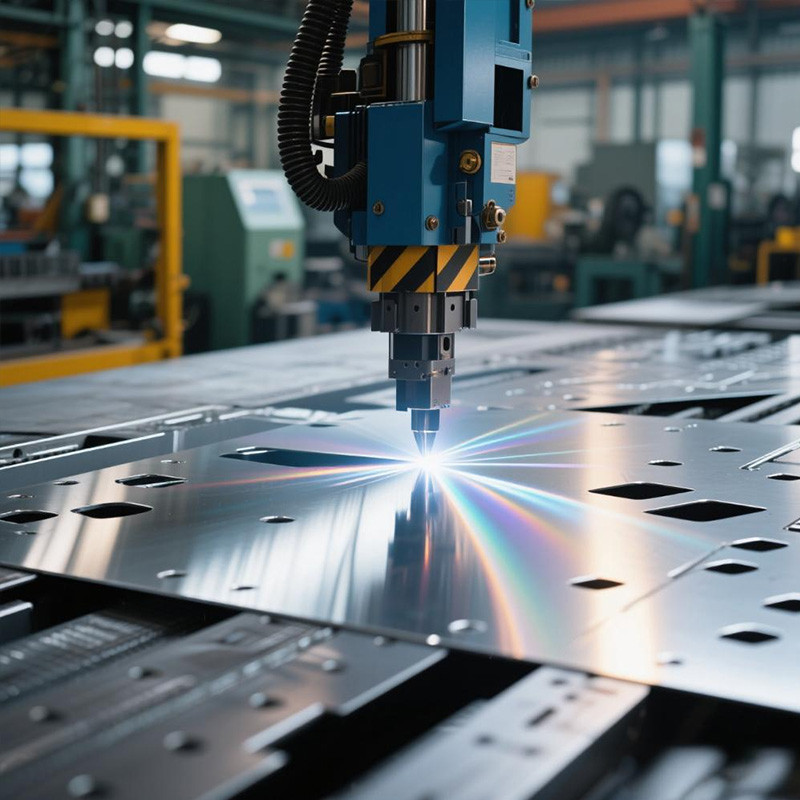
Material Preparation: Select a flat metal or non-metallic sheet (such as steel or plastic), typically with a thickness ranging from 0.1 to 25 mm, and clean it to prevent impurities from affecting cutting quality.
Equipment Calibration: Activate the laser oscillator (using a mixed gas such as nitrogen, carbon dioxide, and ammonia) to generate the laser beam. The beam shape is adjusted, and the motion unit is calibrated using a mechanical system (such as a sprocket mechanism) to ensure a smooth cutting path.
Cutting: A preset pattern is input into the computer, and the motion unit moves the cutting head, scanning the focused beam along the material contour. The high temperature of the beam locally melts or vaporizes the material, while a coaxial airflow simultaneously removes slag, resulting in a smooth cut.
Post-processing: After cutting, the parts are cleaned to remove residual slag and undergo quality inspection (such as measuring dimensional accuracy and surface finish). Some applications (such as fabric or PCBs) may require additional steps such as engraving or etching.
The overall process emphasizes automation and continuous production, ensuring high efficiency and adaptability to small-batch customization needs. Applicable Products
Laser cutting technology is suitable for processing a wide range of materials, primarily including:
Metal products: Precision mechanical parts (such as automotive components and medical device housings), industrial equipment components (such as steel plate cuts), and electronic products (such as circuit board substrates), requiring high precision and narrow cuts.
Non-metal materials: Plastic products (such as prototypes), glass panels (such as decorative items), textiles (such as fine fabric cutting and pattern engraving), and paper products (such as packaging templates). Fabric processing can be extended to cutting tables and special surface treatments.
Special applications: Semiconductor chip cutting, architectural and decorative materials (such as laser marking and positioning), and rapid prototyping, highlighting its versatility in smart manufacturing.
2. Sheet Metal Bending
Sheet Metal Bending Principles
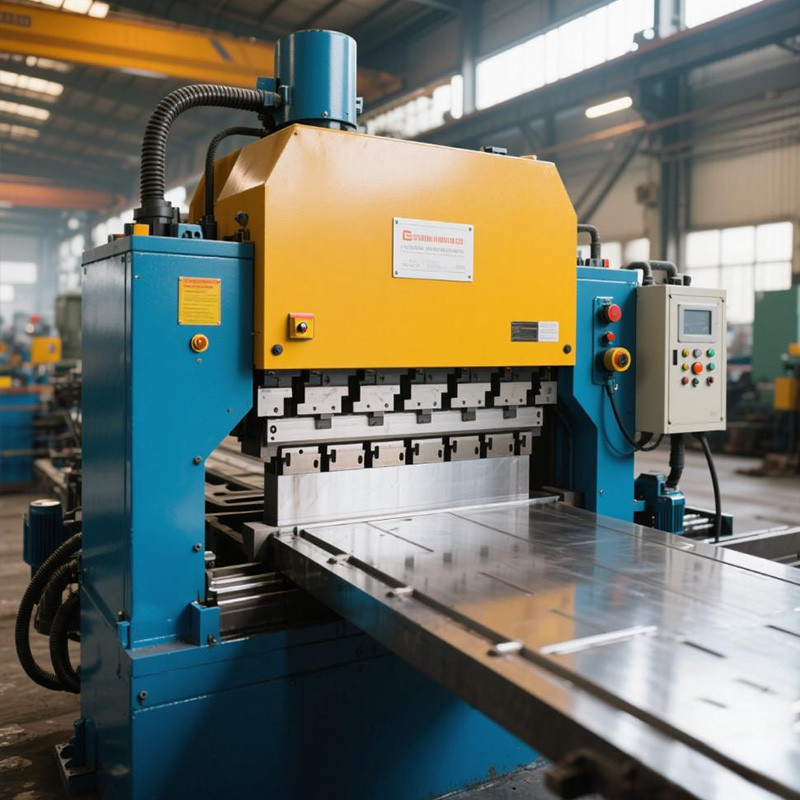
Sheet metal bending is based on the plastic deformation properties of metal materials. External mechanical forces are used to permanently deform the sheet metal along the bend line. During the bending process, the outer side of the sheet metal experiences tensile forces, causing elongation, while the inner side experiences compressive forces, causing contraction. The position of the neutral layer (a virtual layer whose length remains unchanged before and after deformation) depends on the material properties and the bend radius. The upper die (punch) of a core machine (such as a hydraulic press brake or CNC press brake) presses the sheet metal into the V-shaped groove of the lower die, achieving the desired angle and shape through precise control of pressure and displacement.
Bending Operation
The sheet metal is precisely placed between the upper and lower dies and secured with a stopper mechanism. Pressing: The hydraulic system drives the upper die downward, causing the sheet metal to plastically deform along the bend line, forming a V-, U-, or Z-shaped structure.
3. Sheet Metal Stamping
Sheet Metal Stamping Processing Principles
Sheet metal stamping is based on a cold forming process. At room temperature, a press drives a die to apply instantaneous high pressure to the metal sheet, causing the material to plastically deform or separate. Its core principles include:
Separation Forming: Utilizing the shearing action of the punch and die, the sheet metal is fractured along a closed contour (e.g., punching and blanking).
Plastic Deformation: The die cavity constrains material flow, achieving three-dimensional shapes such as stretching and bending (e.g., stretching a housing).
This process relies on die precision to control product dimensions, ensuring uniform material thickness (typically 0.8-3mm). Heating is not required, maintaining material strength.
Stamping Operation
Use CAD software to design the sheet metal part's shape, dimensions, and hole locations.
Calculate the unfolded dimensions and correct for neutral layer offset (bend compensation). Stretching: Flat sheet material is stretched into a hollow part (e.g., a cup-shaped shell) within a mold;
Bending: V/U-shaped bending, rolling (ring-shaped structures);
Partial forming: Beading (to reduce springback), embossing (surface patterning)
4. Sheet Metal Hydraulics
Sheet Metal Hydraulic Processing Principles
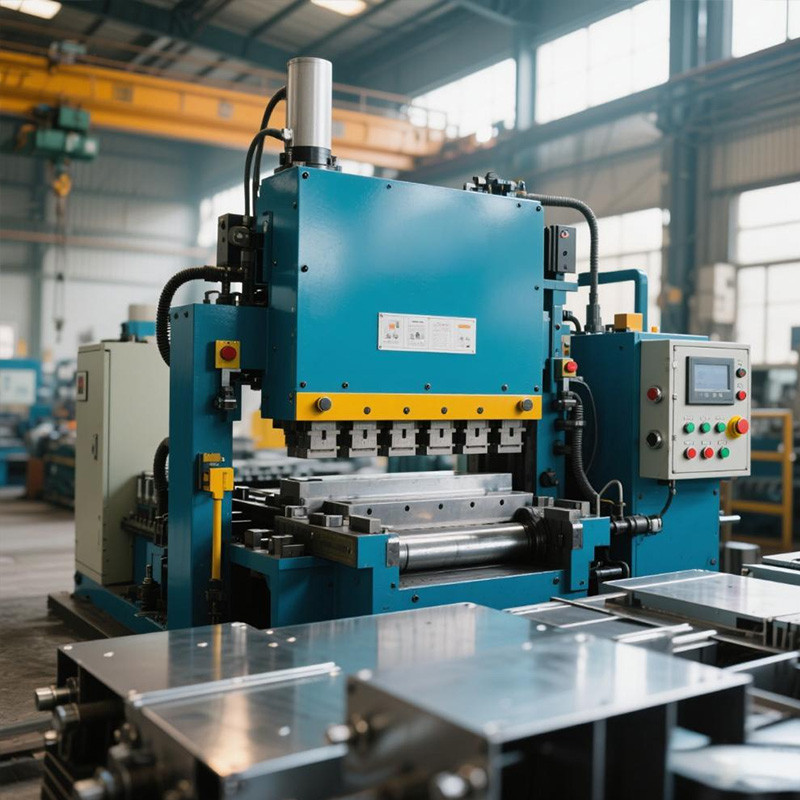
Sheet metal hydraulic processing utilizes liquid as a force transmission medium, replacing rigid molds. High-pressure liquid forces metal sheets against a die or punch, achieving plastic deformation of complex structures. Its core principles include:
Flexible Forming: Liquid pressure acts evenly on the sheet metal surface, reducing localized stress concentrations and improving material fluidity and forming limits (especially for deep-drawn parts);
Frictional Retention Effect: High-pressure liquid presses the sheet metal against the punch, increasing friction to prevent wrinkling. Liquid lubrication on the die side reduces frictional resistance and mitigates the risk of cracking. The process is divided into two categories:
Hydroforming: The die is filled with liquid, and the punch descends to compress the liquid, generating high pressure, and the sheet is formed against the punch.
Hydroforming: The liquid acts directly as a punch, pushing the sheet against the die cavity to form the part.
Core Steps of Hydroforming:
Sealing the Blank Holder
The blank is placed in the die, and the blank holder applies pressure to seal the liquid chamber, forming a closed cavity.
Liquid Pressurization: Liquid (a water-based emulsion) is injected into the liquid chamber, initially forcibly pressurized to 20–100 MPa using a hydraulic pump.
Punch Descends to Form:
The punch is pressed into the liquid chamber, and the sheet is pressed against the punch under liquid pressure, completing the stretching/bulging (e.g., curved surfaces of car doors).
Unloading and Removal: The liquid pressure is released, the punch and blank holder are lifted, and the formed part is removed.
Typical Applications: Automotive door/instrument panel beams, cylindrical deep-drawn parts (fuel tanks), aerospace curved surfaces, motorcycle exhaust pipes, natural gas pipelines, etc.
5. Sheet Metal Welding.
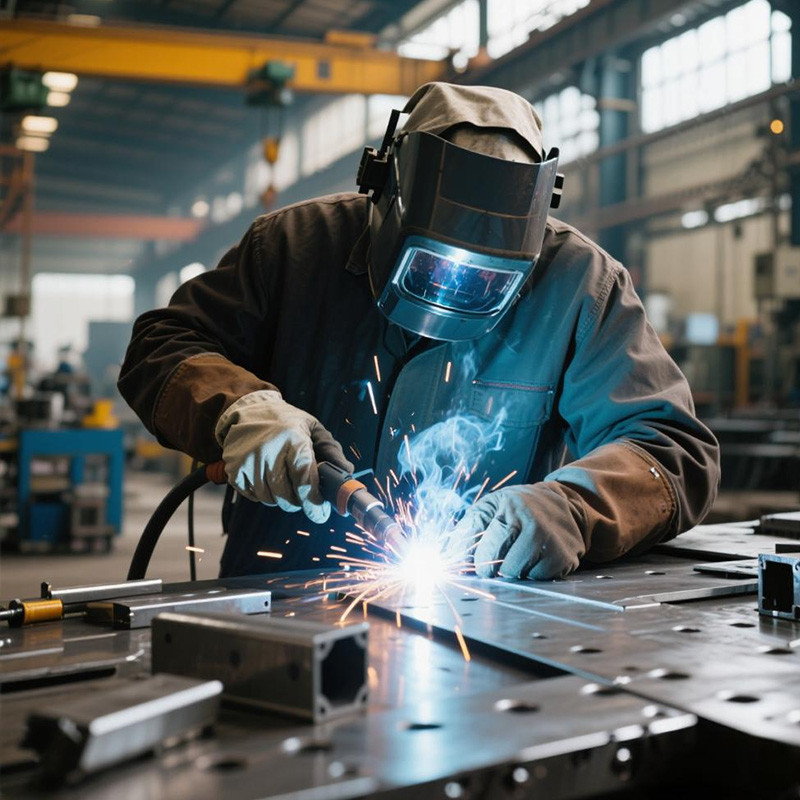
Structural Connection: This technique combines multiple sheet metal parts (such as body shells, chassis components, cabinet doors, and main bodies) into a complete structure, ensuring mechanical strength and integrity. Welds seal sheet metal joints, preventing moisture intrusion and extending component life. This is a core step in sheet metal assembly.
Welding Method Selection:
Resistance Spot Welding: Suitable for overlapping thin sheets (such as body panels), using electrodes to apply pressure and electricity for localized melting.
Gas Shielded Gas Welding (MIG/MAG): Used for continuous welds on structural parts (such as vehicle frames), using argon/CO₂ to isolate the air and prevent oxidation.
Laser Welding: High-precision joining of high-strength steel plates with minimal deformation (such as door seals).
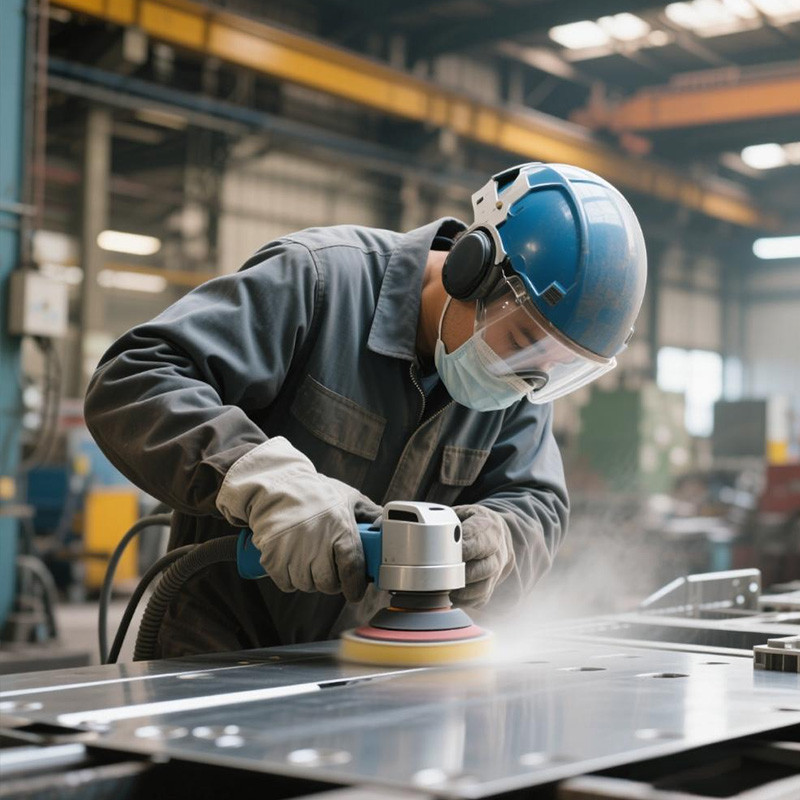
6. Sheet Metal Grinding
Purpose and Process of Sheet Metal Grinding
Removes oxide layers, rust, and welding residue from the sheet metal surface, resulting in a smooth and flat surface, providing a qualified base for subsequent painting/electroplating;
Eliminates defects such as burrs and scratches, reduces frictional resistance, and extends service life.
Ensures coating adhesion
Increases surface roughness (Ra 1.6–3.2μm), significantly improving the bond between paint and powder coating and the metal, preventing peeling.
Repairs structural damage
After correcting sheet metal deformation, polishes to eliminate stretch marks and microcracks, restoring the structural integrity of the vehicle body;
Reduces stress concentration points, improving component fatigue resistance. Enhanced Safety and Aesthetics
Eliminate sharp edges to prevent cuts and injuries during operation, improving user safety;
Produce a smooth vehicle body appearance to meet high-quality visual requirements (e.g., automotive exterior panels);
Pre-grinding Stage
Cleaning and Evaluation
Use a degreaser to remove oil and dust from the sheet metal surface to prevent clogging during grinding;
Mark areas requiring focused grinding, such as dents and weld scars.
Core Grinding Process
Rough Grinding (80–120 grit sandpaper)
Preliminary grinding of corrected deformed areas (e.g., door dents) to remove raised welds, rust, and old paint;
Use a pneumatic grinder with a hard grinding head to quickly smooth large uneven areas. Fine Sanding (400–2000 grit sandpaper)
Transition Sanding: Use 400–800 grit sandpaper to eliminate rough sanding marks and create a uniform texture.
Final Polishing: Use 2000 grit wet sandpaper dampened with water to achieve a mirror finish and eliminate micro-scratches (Ra ≤ 0.8 μm).
Special Area Treatment
Weld Seams: Use a dedicated conical grinding head to finely polish weld scars and ensure smooth transitions.
Sharp Edges: Use hand-sanded sandpaper wrapped around a cork block to prevent overcutting.
Post-Processing and Quality Inspection
Cleaning and Dust Removal
Blow away sanding dust with a high-pressure air gun and wipe away any remaining particles with a non-woven cloth.
Pre-Coating Treatment
Spray epoxy primer to fill micro-pores and enhance rust resistance.
Quality Verification
Tactile Testing: The surface is smooth and free of scratches and burrs.
Reflective Testing: No visible scratches or uneven texture under oblique light.
Adhesion Testing: Cross-hatch testing verifies coating adhesion (≥90% without peeling).
Product quality inspection
Cleaning and dust removal
High pressure air gun blows away grinding dust, and non-woven fabric wipes off residual particles on the surface.
Pre coating treatment
Spray epoxy primer to fill micro pores and enhance rust prevention ability.
Quality verification
Touch detection: There is no unevenness on the surface when touched by hand, and there are no burrs or scratches on the hand;
Reflective inspection: no visible scratches or uneven texture under oblique light;
Adhesion test: Cross cut test to verify the bonding strength of the coating (≥ 90% without detachment)